
Learning how to start a children’s clothing line takes more than a creative idea. From choosing your niche and understanding your target audience to building your brand and deciding how to produce your products, there are some important decisions you need to make. This guide breaks down the process eight practical stepswith the research and expert advice you need to get your business off the ground.
1. Research the children’s fashion market
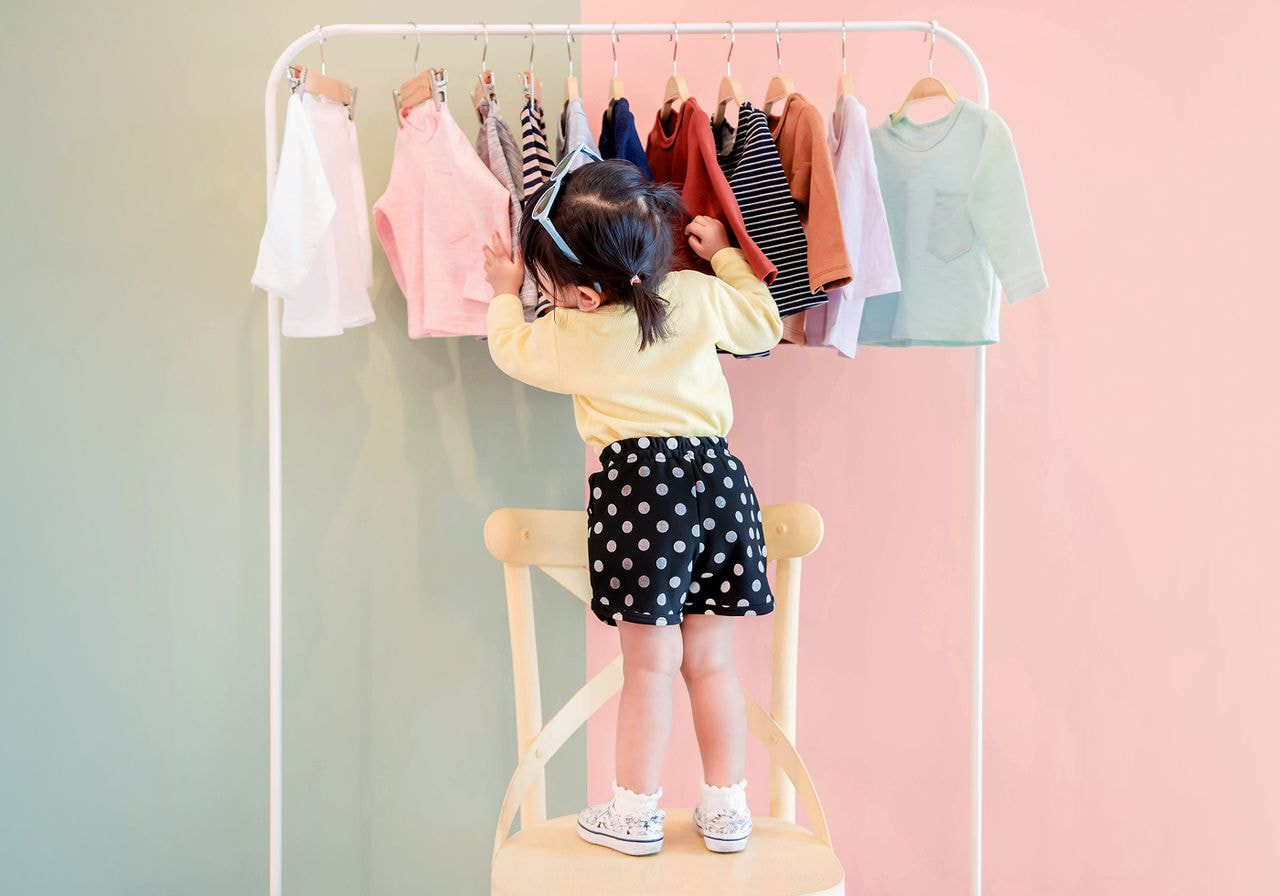
Before you start a children’s clothing brand or sketch a single hoodie, explore the landscape. Market research tells you what parents are already buying, what’s missing from the shelves and where your children’s clothing line could actually stand out – instead of guessing and hoping it works.
Discover children’s fashion trends
Children’s fashion changes quickly. Keep an eye on what’s popular to discover opportunities for your own clothing line.
-
Stay informed. Attend industry events, follow children’s fashion brands and makers on social media, and read trend reports to see what’s gaining popularity.
-
View color and design trends. Pay attention to seasonal color palettes, images and styles that appeal to your target audience.
-
Pay attention to prints and patterns. Keep up with designs kids love, like animal motifs, geometric shapes, floral prints and whimsical illustrations.
-
Integrate different styles. Explore popular styles such as athleisure, streetwear, vintage-inspired and eco-friendly collections to identify gaps in the market.
Understanding children’s unique needs
Children’s clothing has specific requirements. To be successful in the children’s clothing industry, you must understand these specific needs before designing your own clothing line.
Comfort
Kids have sensitive skin and active, growing bodies, so comfort isn’t optional. Look for breathable fabrics such as cotton and cotton blends, relaxed cuts that won’t restrict movement or irritate sensitive skin. If a fabric feels rough to you, it will feel even worse to a toddler.
Safety
Make sure garments meet relevant children’s clothing safety standards, including regulations such as the CPSIA if you’re selling in the US. Avoid loose buttons, beads, drawstrings or other small parts that could pose a choking hazard, and use secure closures that are appropriate for your target group.
Sustainability
Children are active – including climbing, spilling and crawling through mud puddles – so their clothes need to last a long time. Choose quality fabrics that hold up well after frequent wearing and washing.
2. Identify your niche audience
Once you’ve done your market research, the next question is: who exactly are you selling to? The better you understand your target audience, the easier it is to design products, determine your pricing strategy and market your brand.
Buyers
Bring your products to the attention of both children and parents. Children often have an influence on what they want to wear, but parents are the ones who buy it.
Parents
Parents have different priorities when shopping for their children. Most strive for a balance between price and quality, so your pricing strategy should reflect your target audience.
Others are willing to spend more on unique designs, matching outfits or premium products that reflect their style and values. These shoppers are often drawn to more fashionable collections and have the means to pay more.
Children
In addition to targeting parents, consider marketing strategies specifically tailored to children. Parents want their children to love the clothes they wear, so it’s also important to reach a younger audience through a child-oriented marketing plan.
Friends and family
Don’t forget the influence of people like friends, grandparents or godparents. They are also decision makers, especially when it comes to gifts, and will help you grow your customer base.
Age
Tailoring your children’s clothing line to specific age groups is essential for success. If you’re wondering how to start selling baby clothes specifically, know that your products, branding and marketing will look different than a line aimed at school-aged children. Babies need softer fabrics and simpler cuts, while older children care more about style.
Think about children’s needs at every stage, from early childhood through to the pre-teen years. A two-year-old and a ten-year-old want very different things from their clothes. Also consider how a parent’s age influences purchasing decisions, as choices can vary by age range and generation.
Aesthetics and interests
Think about what appeals to both parents and children. For example, clean lines and soft colors attract parents looking for a minimalist style, while playful details such as animal prints or charming embroidery make garments more exciting for children. By combining the two, your brand can appeal to a wider audience.
Occasions
Consider when children will wear your products. By designing around specific occasions you can build a more targeted collection and bring it to the attention of the right customers. For example:
Location
The location of your customers influences what they need in children’s clothing. Climate, local traditions and seasonal weather all influence purchasing decisions. For example, lightweight cotton T-shirts are suitable for warmer regions, while colder climates require hoodies, jackets and other warm layers.
Don’t forget to check out your competitors
Competitor analysis is crucial for identifying your niche audience and differentiating yourself in the market. Study your competitors’ offerings and compare them to your products. It will help you find your products competitive advantage.
Also read: How to design your own clothing line in 2026
3. Decide on the implementation
One of the biggest decisions you’ll make early on is how to handle execution. Self-fulfillment and print-on-demand services pose very different trade-offs in terms of your time, upfront costs and margins. Here’s how they stack up.
Self-development
If you choose to handle the fulfillment yourself, there are several factors to consider:
Positives
-
You have control over the entire fulfillment process, from inventory management to shipping
-
It is easier to maintain quality control and ensure product consistency
-
It is possible to provide a more personalized customer experience with things like branded packaging
Disadvantages
-
Requires much more time, resources and logistics to manage inventory, handle packaging and handle shipping
-
Higher upfront costs for purchasing and storing inventory
-
Increased responsibility for order processing, customer service and returns
Print on demand
On the other hand, on-demand printing offers a different set of benefits and considerations:
Plus points
-
There is no need to invest in inventory upfront as custom clothing is only made after a customer places an order
-
Lower overhead costs – printing, packaging and shipping is handled by your POD supplier
-
Flexibility to offer a wide range of designs and styles without the need to hold inventory
Disadvantages
-
Less control over the fulfillment process, which can impact quality and shipping times
-
Packaging customization may be limited depending on your POD supplier
-
Higher product cost per unit compared to bulk production
There is no one-size-fits-all approach. The choice depends on your specific business needs, resources and objectives.
Price tip: Sellers who sell print-on-demand children’s clothing usually end up in the 20-50% profit margin range. To achieve that, you need to set a price high enough above the cost of your base product to cover fulfillment costs while still leaving room for marketing spend. Most POD sellers start with one 2-3x increase their base costs and then adjust them based on what their target market will actually pay.
4. Create designs
This is where your ideas come to life. Sketch a few concepts, experiment with different styles and refine your favorites before creating your final designs. Design software or a freelance designer can also help you turn your ideas into production-ready works of art. Do you need some inspiration? Here are a few popular design ideas for children’s clothes.
Family sets
Matching family outfits are a popular choice. Combine children’s clothing with adult items, such as T-shirts or hoodies for parents and children, to appeal to the whole family.
Animals
Animal themes are always popular in children’s clothing. Make your designs stand out with watercolor artwork, embroidered details, modern illustrations or hand-drawn characters.
Puns and puns
Funny sayings combined with cute illustrations can catch the attention of both children and parents. Keep the wording short, easy to read, and age appropriate. For example, phrases like “Small but Mighty,” “Nap Wild,” or “Berry Sweet” pair well with simple images and make for fun, everyday designs.
Minimalist
Minimalist designs remain a popular choice, especially among parents looking for gender-neutral baby clothes. Simple graphics, neutral colors and sleek typography provide a timeless look.
Fun and lively
Bright colors, playful characters and cheerful quotes appeal to children of all ages. Experiment with retro images, bold shapes or abstract illustrations to create designs for different age groups.
DIY inspired
Turn children’s creativity into wearable art. Let customers upload their little ones’ drawings, handwritten messages or painted artwork to create unique, custom clothing that is personal and memorable.
Inspired by nature
Designs with a nature theme provide a fresh, timeless look. Experiment with floral patterns, leaf motifs, earthy colors, fruits, vegetables, heavenly elements or seasonal illustrations to create playful collections inspired by the outdoors.
Holiday
Seasonal collections are a great way to attract repeat customers. Create designs for Valentine’s Day, Halloween, birthdays, Christmas or back to school so parents have new options all year round.
Nice patterns
Cute prints never go out of style, and most parents love timeless patterns that can dress their kids all year round. Patterns with stars, clouds, dinosaurs, forest animals, rainbows or small hearts look great on baby bodysuits, T-shirts and pajamas.
Meaningful designs
Some parents like clothes that reflect their family’s values. Messages about kindness, inclusivity, protecting nature or celebrating curiosity can be combined with simple illustrations to create thoughtful designs that kids can wear every day.
Build a balanced children’s clothing line by combining evergreen designs with seasonal collections. Timeless styles keep your kids’ clothes relevant all year round, while holiday releases and limited editions give customers a reason to come back for something new.
Need help creating your designs? Printful’s free Design Maker includes clipart, premium images, text tools, and mockups to make the process easier. Upload your artwork or create a design from scratch and preview it on different products before adding it to your store.